

The best dog harnesses by breed: which model to choose?
|
|
Time to read 3 min


|
|
Time to read 3 min
Choosing the ideal dog harness is an important step to ensure your companion's comfort, safety, and well-being. With a variety of breeds, sizes, and behaviors, it's essential to select a model adapted to your dog's morphology. In this article, we will guide you in choosing the best harness based on your dog's breed to ensure a pleasant and safe walk.
Small dog breeds, such as Chihuahuas, Yorkshire Terriers, or Bichon Frises, need a lightweight and soft harness that doesn't compress their delicate small bodies. Small dogs are more sensitive in the trachea area, so it's best to avoid any harness that could put pressure on their neck.
A vest-style or "H"-shaped dog harness is often recommended for small breeds. These models distribute pressure evenly across the chest, avoiding any tension in the neck area. Make sure the harness is well-fitted but comfortable, with adjustable straps for a perfect fit.
Medium-sized dogs like the Cocker Spaniel, Beagle, or Border Collie require a harness that combines comfort and control. These breeds are often very energetic, so it's essential to choose a harness that provides good support while allowing sufficient freedom of movement.
For medium breeds, a "Y"-shaped harness or an anti-pull harness is often the best choice. The "Y"-shaped dog harness is perfect for daily walks, while the anti-pull harness is ideal if your dog tends to pull on the leash.


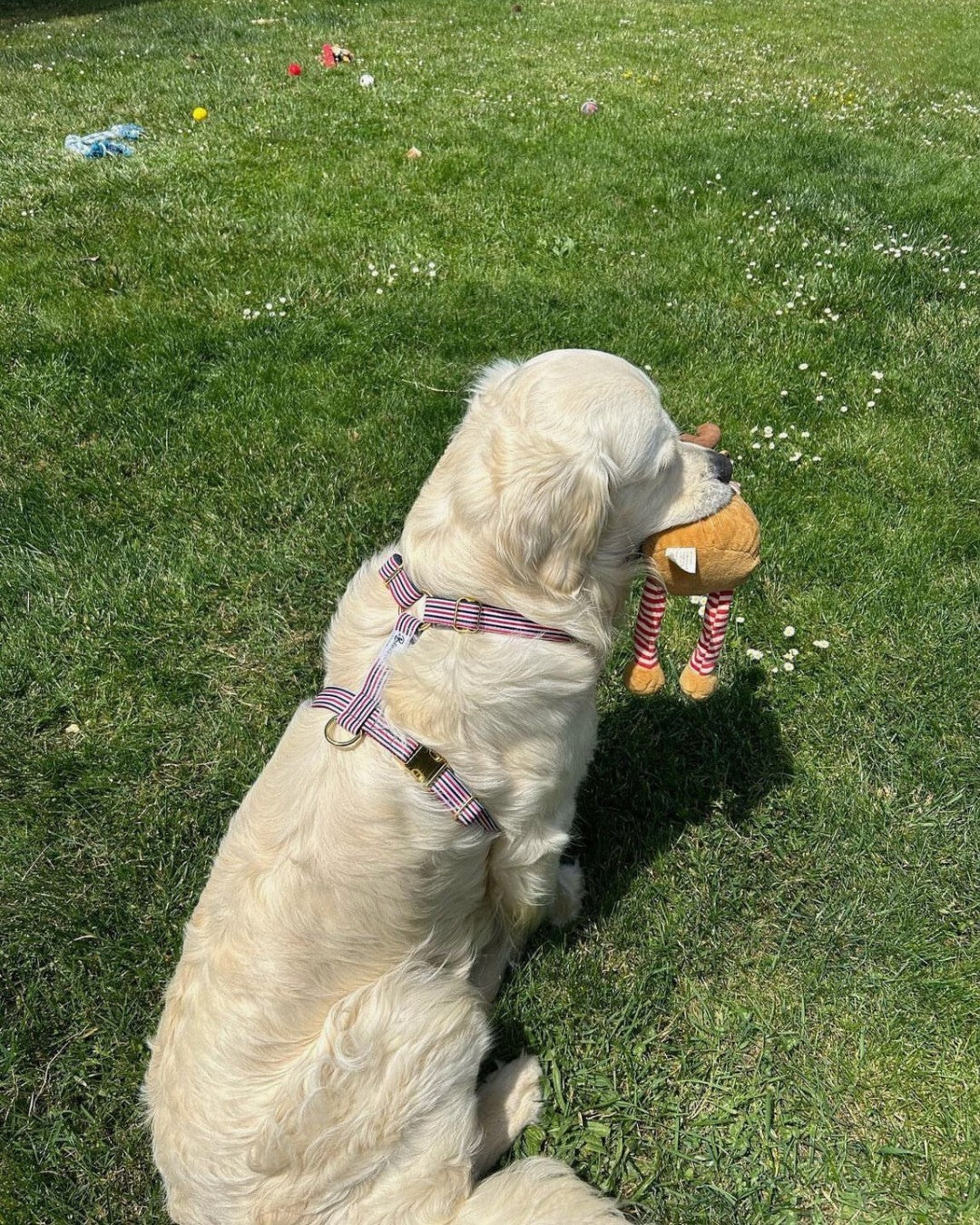
Large dog breeds, such as German Shepherds, Labradors, or Golden Retrievers, require a robust harness capable of handling their strength and size. A good harness for these breeds must be strong enough to ensure safety while providing a comfortable fit.
For large breeds, a reinforced harness is essential. These models often feature wide straps and robust attachment points to ensure optimal control during walks. A safety harness with a back handle is also a good choice, as it allows for better control of your dog in delicate situations.
Brachycephalic dogs, such as French Bulldogs, Pugs, or Boxers, are short-nosed breeds that can experience breathing difficulties. For these dogs, it is crucial to choose a harness that does not compress their delicate trachea, while allowing them to breathe easily.
A dog harness with an "H" shape design or a wrap-around harness are ideal for these breeds. They allow for an even distribution of pressure across the chest, without putting strain on the neck.
Highly active or sporty dogs, such as Huskies, Malinois, or Border Collies, require a harness that can withstand intense activity while allowing them great freedom of movement. A poorly fitted harness can limit their performance or even cause injuries.
For sporty dogs, a hiking harness or a physical activity harness is essential. These harnesses are designed with durable, lightweight, and breathable materials to offer maximum comfort while ensuring excellent durability.
Senior dogs or those recovering from an injury need a specific harness that supports them without putting unnecessary pressure on their fragile joints. It is essential to choose a model that offers maximum comfort and assistance to help them move safely.
For senior dogs or those in rehabilitation, a harness with back support is recommended. These harnesses are often equipped with handles that allow owners to help their dog get up or move more easily, without putting excessive pressure on their limbs.
The choice of the ideal dog harness depends on many factors, including your dog's size, breed, and behavior. Whether you have a small fragile dog, a large powerful dog, or a sporty companion, there is a harness perfectly suited to their needs. By choosing a well-fitting model adapted to your dog's breed, you ensure their comfort, safety, and joy during every walk.

